In this section, we present a series of links to books and articles covering theology, classics, and poetry, including both translations and a monograph on translation theory.
Translated Works
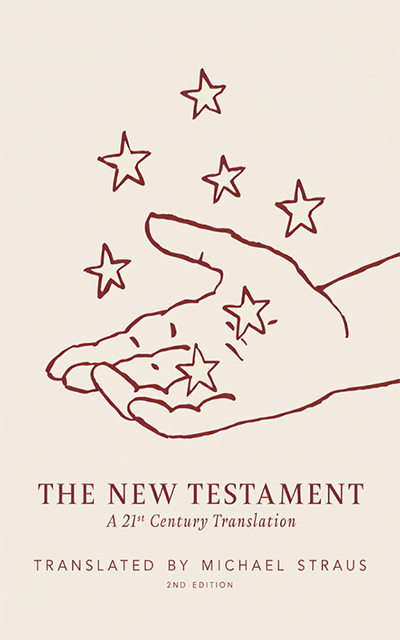
The New Testament: A 21st Century Translation (2nd ed.) (2024)
The goal of this contemporary translation is to bring some fresh turns of phrase to the New Testament's varied texts, adapting linguistic forms as a given genre or writer's style might suggest. The aim is not to supplant prior translations so much as to shed light on obscure passages; capture the humanity of Jesus' personality as presented in the Gospels; intelligibly convey doctrine and experience as related in Acts and the Epistles; and reflect the atemporal nature of the Book of Revelation.
The translation seeks to be at once enjoyable, novelistic and at times poetic, avoiding the overly-literal, freely adopting the colloquial, and taking grammatical license where the writer employed imagery not subject to standard linguistic limitations. The translation as a whole approaches Scripture as the viva vox evangelii, with ongoing linguistic presence through credal, liturgical, sermonic and other forms of expression.
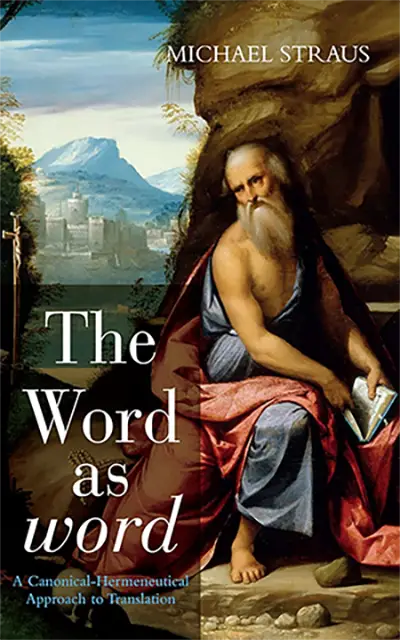
The Word as word (2024)
This book provides an original translation methodology applicable in the first instance to the New Testament, one that remains rooted in the literal Greek; considers its paleographic and philological characteristics as well as its socio-historical context; understands the text as part of a canonical whole; reflects its reception history in church doctrine and liturgy; accounts for “classical” formulations of its translation-tradition; yet speaks with contemporary literary style.
In developing this methodology, the work appropriates ancient and modern insights into the relationship of thought and language not previously considered in the context of translation. As such, the book provides a pathway to translating the Scriptures in such a way as to capture, recapitulate, and incorporate the living sweep of the timeless Word in words that cross time.
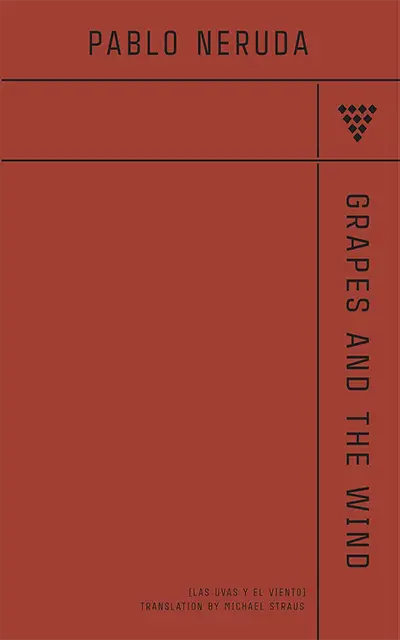
Pablo Neruda (Michael Straus, trans.), Grapes and the Wind (2019)
Despite being among Neruda’s most important works and one of his favorites, Las Uvas y el Viento (Grapes and the Wind), had never previously been translated into English. It was written during his mature period in the early 1950s alongside the Canto General during Neruda’s political exile from Chile because of his membership in the Communist Party. In the poem he describes the complex political and poetic landscape that developed post-WWII, ranging from Isla Negra in Chile to Mao’s China.
In essence, the poem is Neruda’s hymn to newly-emergent nations and societies in Europe and Asia, while at the same time comprising a lyrical love song to his distant homeland. The impetus to translate this oddly neglected work of a Nobel Prize winning poet arose out of the translator’s time as a student in Chile, where he first encountered the work
Theological Works
Review, Peter Comestor’s Lectures on the Glossed Gospel of John: A Study with a Critical Edition and Translation (2026)
This review examines the first critical edition and English translation of a series of lectures given by Peter Comestor, a 12th century theologian, on the Glossa ordinaria (the standard commentary) on the Gospel of John, a form of text distinctive for its presentation of the Scriptural text together with interlineations and interwoven marginal commentary preserved from Patristic times.
The review focuses on Comestor’s lectures as more than a simple walk-through of the Glossa ordinaria, but rather a meta-commentary on them, a “gloss on the gloss,” evidencing not only the vitality of the oral teaching tradition prevailing in the Paris schools on the eve of universities’ formation, but the living nature of the biblical text itself, consistent with the philosophical linguistics that underlie the translation theory expounded in The Word as word.
Psalm 2:7 and the concept of περιχώρησις (2014)
This article takes as its springboard the text of Psalm 2:7, in which the Psalmist refers to himself as a “begotten” son of God by virtue of his Lord's decree. The article first explores various linguistic and theological options as to the identity of the son to whom the passage refers; and analyses the relationship between that son and the one who is stated to have begotten him. In this context, the article addresses ways in which the passage more generally sheds light on the relationship between God and Israel.
The article likewise examines related texts in the New Testament and later Patristic writings to see whether they provide any enhanced understanding of the relationship of God the Father to God the Son. The article then seeks to determine whether these works, taken as a whole, provide explicit, implicit, or proto-Trinitarian concepts in anticipation of those given fuller expression in orthodox Church doctrine.
Easter as an Ecumenical Conundrum (2011)
This article examines the Easter festival from an ecumenical point of view, focusing on the Patristic period and the so-called “Easter Controversies” in the Early Church concerning the date on which the Resurrection should be observed, as a means of assessing both the validity of the resolution of such controversies and the continuing impact of that resolution.
Classical works
Clytemnestra's Breast (2024)
This article examines the myth of Clytemnestra’s death at her son Orestes’ hands as portrayed variously in tragedy by Aeschylus, Sophocles and Euripides, with the goal of illustrating how each playwright used the core elements of the myth for the particular purposes of a given play. Within that general framework, it pays particular attention to the newly added but vivid detail where Clytemnestra bares her breast Orestes just as he is poised to plunge the knife, a detail that then resonates not only through the plays but also in Greek artwork.
The argument made is that the skeletal outlines of the myth left each playwright with substantial freedom to vary the murder scene, and that the distinctive ways each addressed Clytemnestra's baring of her breast provide important keys to the interpretation of a given play.
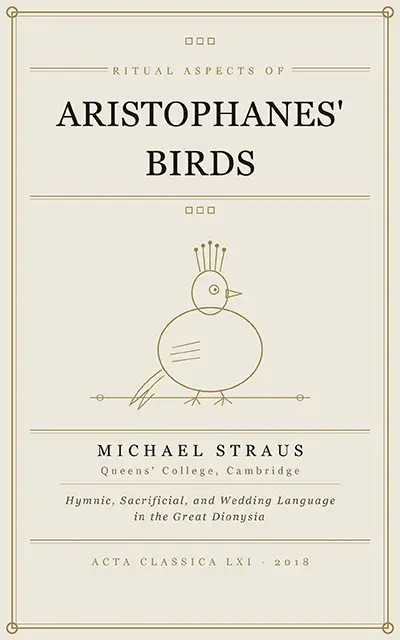
Ritual Aspects of Aristophanes’ Birds (2018)
This article expands on recent scholarly attention to the ritual aspects of Athenian Old Comedy, including its possibly cultic and civic functions within the performative setting of the Great Dionysia, and proposes the use of linguistic and other tools as a means of providing deeper appreciation of such aspects of the plays.
The article argues the point by applying these tools to a study of the use and occurrence of hymnic, sacrificial and wedding language and themes in Aristophanes’ Birds, and by examining the interplay of the stage action with the festival’s surrounding ritual and civic events
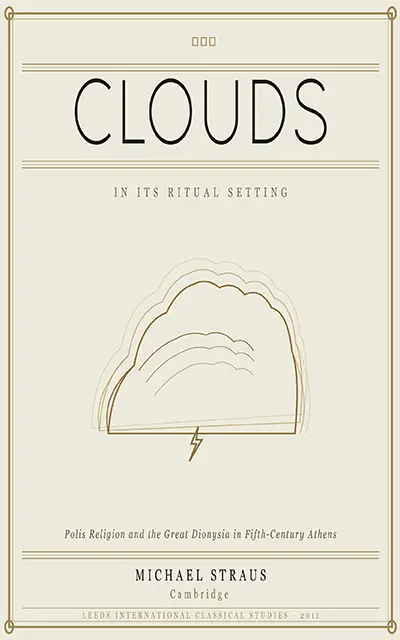
Clouds in its Ritual Setting (2011)
This article examines Aristophanes’ Clouds within the framework of the ritual events of the Great Dionysia, drawing parallels between those events and various textual and performative aspects of the play.
It argues that scholarship to date has largely subordinated the play’s ritual aspects, examination of which reveals that Aristophanes crafted a vigorous defense of polis religion against the “new thinking” and “new gods” represented by Socartes as the play’s foil.